
Rare Earths – prospects for a more resilient supply of raw materials
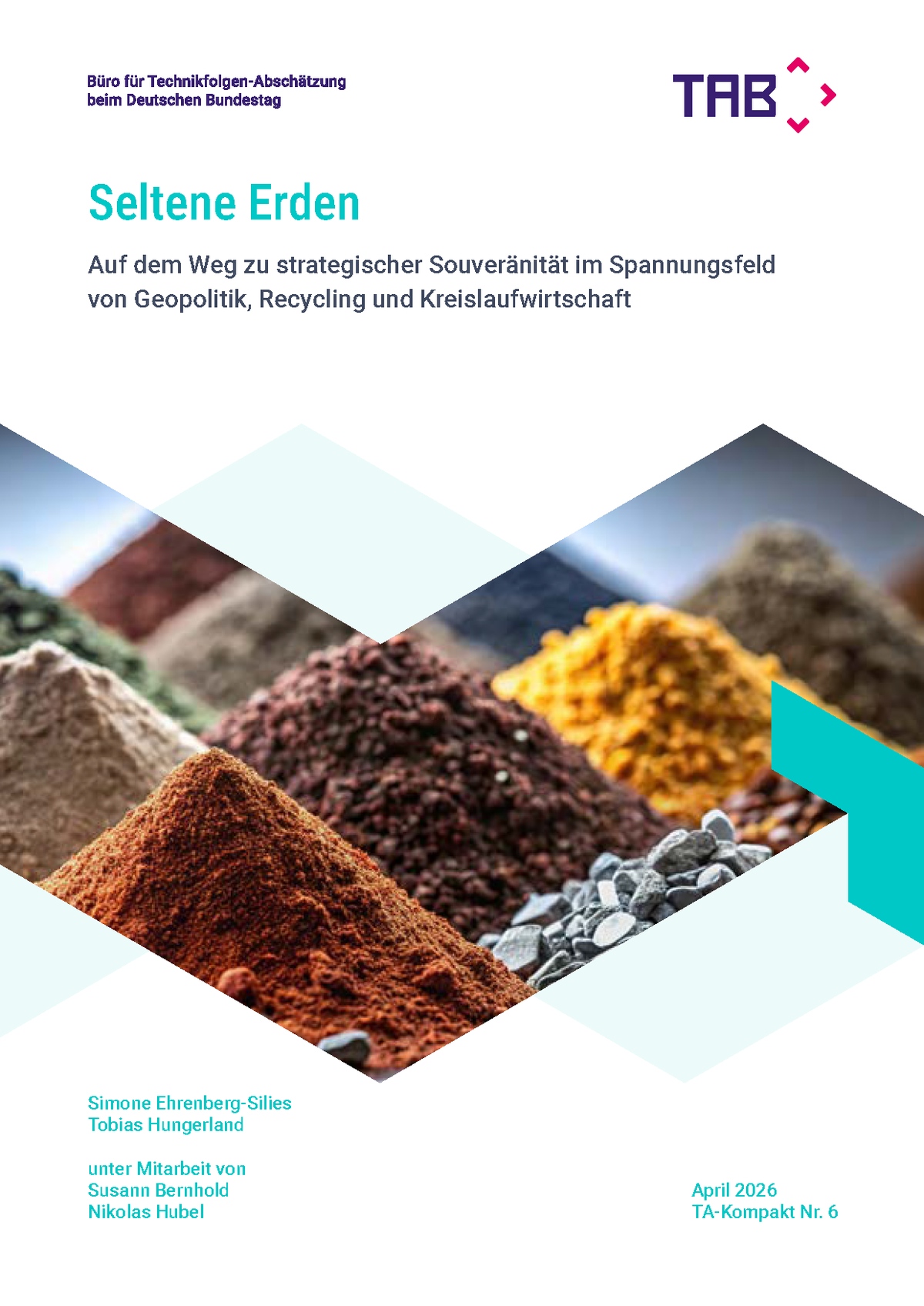
Rare earth elements are key raw materials for numerous technologies, including wind turbines, electric vehicles, digital infrastructure and modern military technology. Their importance continues to grow in the wake of digitalisation, decarbonisation and demographic change. Although they are found worldwide, the largest reserves are concentrated in just a few countries – almost half of them in China, which also dominates large parts of the value chain.
Against this background, the TA-Kompakt study examines structural dependencies and potential development pathways for a more resilient supply. The EU Critical Raw Materials Act (CRMA) provides a policy framework, defining, among other things, targets for domestic extraction, recycling and further processing by 2030.
The study identifies several courses of action which, when combined, can contribute to strengthening security of supply. A key focus is the expansion of a circular economy, including improved collection and take-back structures, technological advances in recycling, and instruments such as digital product passports. In addition, substitution research is gaining importance aiming to reduce the use of rare earths – particularly in permanent magnets – or to replace them with alternative materials.
Furthermore, strategic reserves and financial support for mining projects outside China are discussed as options for securing and diversifying supply – particularly in conjunction with an expansion of European processing capacities.
The analysis shows that individual measures on their own are not sufficient to reduce existing dependencies. What is required is an integrated approach that links primary extraction, recycling, substitution and strategic preparedness. The study thus provides a basis for the further development of policy strategies for dealing with critical raw materials.
The key findings are summarised in six questions and answers, available on the project website.
| The TA‑Kompakt series presents current topics in a concise, scientifically sound format to support political decision-making processes in the German Bundestag. |
12.05.2026
Further information and download
- TA-Kompakt Nr. 6
Seltene Erden.
Auf dem Weg zu strategischer Souveränität im Spannungsfeld von Geopolitik, Recycling und Kreislaufwirtschaft (PDF)
(Rare earths. Towards strategic autonomy at the intersection of geopolitics, recycling, and the circular economy)
doi:10.5445/IR/1000192845 - Project page Rare earths – the supply situation, considering geopolitical risks and progress in recycling and establishing a circular economy
(with „Six questions – six answers“)