
Neurotechnologies: applications, potential and new challenges for policy and society
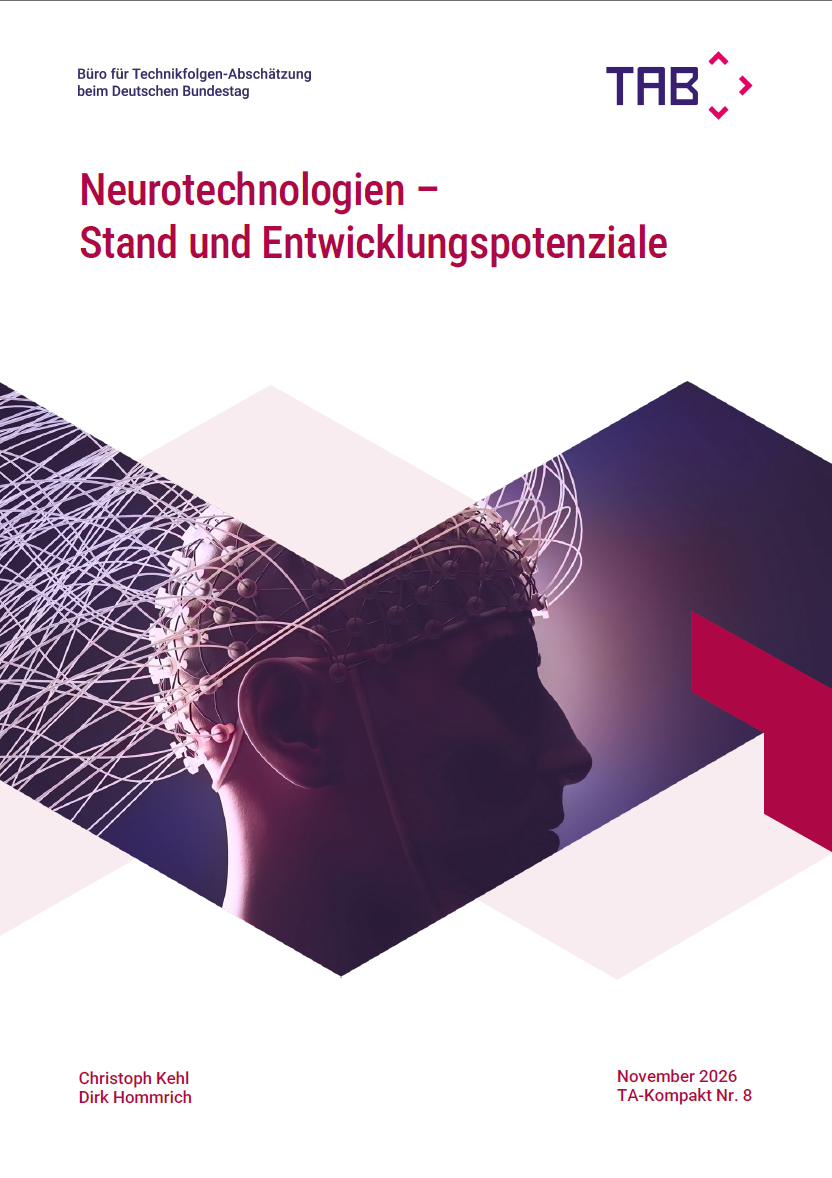
Neurotechnologies are developing at a rapid pace. Advances in brain-computer interfaces, neural implants, brain stimulation and AI-supported signal processing are expanding the possibilities for treating neurological disorders and supporting patients with severe impairments. At the same time, non-medical applications in areas such as wellness, education, work and entertainment are becoming increasingly important. Against a backdrop of rising investment, growing market activity, and new application prospects, this new study reviews the development in this area since the publication of the last TAB report on the topic in 2016.
Neurotechnological applications have so far been particularly well developed in the medical sector. These applications are used to treat conditions such as Parkinson's disease, epilepsy, chronic pain and depression. Advances in brain-computer interfaces are also opening up new prospects for people with severe paralysis or loss of speech. Meanwhile, the consumer market has grown significantly in recent years, with non-invasive systems increasingly being integrated into wellness, fitness, learning and entertainment applications, although robust evidence for their effectiveness remains limited and, in some cases, contested.
As neurotechnological applications become more widespread, ethical, social and legal issues are emerging. These include challenges relating to the protection of mental privacy and sensitive neurodata, as well as issues of autonomy, justice and safety. The report discusses ways of addressing the regulatory grey area between medical devices and consumer applications and examines approaches to the responsible governance of the field.
The future development of the field depends on various factors, which are analysed in the report. International competitive dynamics play a central role. While the USA and China are already promoting neurotechnologies as a strategic sector, Germany, despite its strong research institutions and high-performing medical technology industry, has so far only been able to translate these strengths into market-ready applications and economic value creation to a limited extent. The report therefore highlights the need for a more strategic and integrated approach to innovation, clinical translation and responsible governance in Germany. The study identifies strengthening clinical translation and regional innovation ecosystems, continuous technology monitoring, and the further development of regulatory and international governance frameworks as key levers.
The key findings are also available in the form of eight questions and answers on the project page.
|
About the TA-Kompakt series:
|
04.11.2026
Further information and download
- Project page "Neurotechnologies" (including "8 questions – 8 answers"')
- TA‑Kompakt No. 8: Neurotechnologien – Stand und Entwicklungspotenziale (PDF, available in German only)
(English title: Neurotechnologies – status quo and development potential)
doi:10.5445/IR/1000197624