
The use of genetically modified microorganisms in agriculture and environmental protection – status quo and perspectives
- Project team:
Arnold Sauter, Martina Baumann, Sophia Liang, Harald König
- Thematic area:
Biotechnology and health, Energy and environment, Agriculture and food
- Topic initiative:
Committee on Research, Technology, Space and Technology Assessment
- Analytical approach:
TA-Kompakt
- Startdate:
Januar 2026
- Enddate:
2026
Thematic background
Biotechnological modifications to microorganisms open up new possibilities in agriculture, environmental protection, and climate protection. Advances in genome analysis, gene synthesis and targeted genetic modification via CRISPR/Cas-based genome editing techniques, combined with computer- and AI-assisted analysis and design methods, have greatly expanded the production of organisms with desired characteristics over the past 15 years or so. This includes biosynthetic pathways not found in nature. These synthetic biology developments (see TAB Working Report No. 164, Synthetic Biology: The Next Stage of Biotechnology and Genetic Engineering) have already been widely used to generate genetically modified microorganisms (GMMs), primarily bacteria and yeasts, for industrial biotechnology. Products now manufactured using this technology include key basic chemicals, solvents, bioplastics, certain fuels, fragrances and flavourings. Some of these products have a smaller carbon footprint because they are produced from renewable raw materials rather than crude oil or natural gas, or utilise CO/CO₂ from industrial waste gases in their production (gas fermentation).
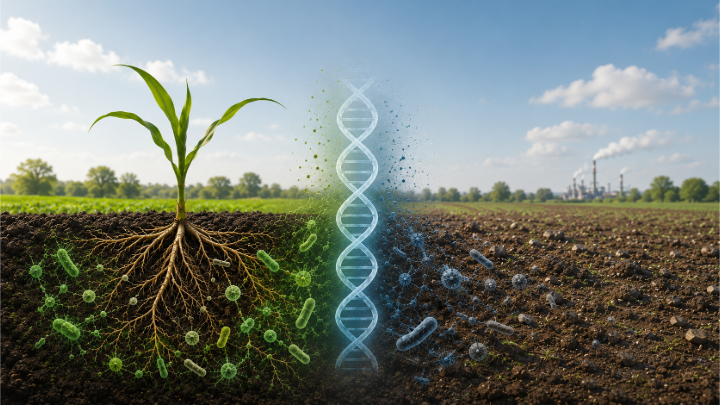
In addition to industrial applications of GMMs in closed systems, there are also efforts to develop applications involving the release of GMMs into the environment. Most of these planned outdoor applications are in the early stages of development. These include using GMMs in crop production to improve nutrient availability, such as phosphorus, potassium and, most importantly, nitrogen, thereby reducing the need for synthetic fertilisers. Another area of application is their use as biological pesticides. A few of these GMM applications, including bacteria for plant protection and improving nitrogen supply in crop production, are currently available internationally, though none are permitted in the EU. Bacteriophages (viruses that specifically infect certain bacteria), which are already used in a few cases to combat bacterial plant diseases, could also be genetically engineered to expand their range of applications (TAB Working Report No. 206, 'Bacteriophages in Medicine, Agriculture and the Food Industry – Application Prospects, Innovation and Regulatory Issues'). Further potential applications for which GMMs would need to be released include decontaminating soils contaminated with hydrocarbons, plastic residues, pesticides or heavy metals (bioremediation), and capturing and storing CO₂ (e.g. in bio-based building materials or rock) using bacteria that absorb and mineralise CO₂.
In the European Union, authorisation is currently required for all applications involving the deliberate release of GMMs into the environment and their placing on the market. This is subject to appropriate environmental impact assessments and the consent of the Member States. In recent years, the European Food Safety Authority (EFSA)'s methodological guidelines have specifically been further developed to enable the appropriate assessment and evaluation of GMMs and new genetic engineering developments, as well as genetically modified plants. In December 2025, the European Commission will propose adapting the legal framework for placing GMMs on the market (for applications outside the food and feed sectors) to facilitate their economic use and better exploit their potential for climate protection.
Objectives and approach
As part of a TA-Kompakt study, the first step will be to present applications in agriculture and environmental and nature conservation, as well as methods for genetically optimising and modifying microorganisms.
Building on this, an overview of current research and development areas will be compiled, as well as of GMMs that have already been authorised and, where applicable, commercialised. The focus will be on applications requiring outdoor use or where environmental exposure to GMMs is likely. Additionally, individual case studies from various fields of application will be characterised in more detail. The role of new methods of genetic modification will be examined, as will their interaction with AI processes where applicable, and the associated possibilities for modifying or redesigning traits.
Finally, possible facilitating and inhibiting factors affecting the likelihood of future field use of GMMs will be identified and discussed. In doing so, new technical possibilities and regulatory conditions will be considered.